

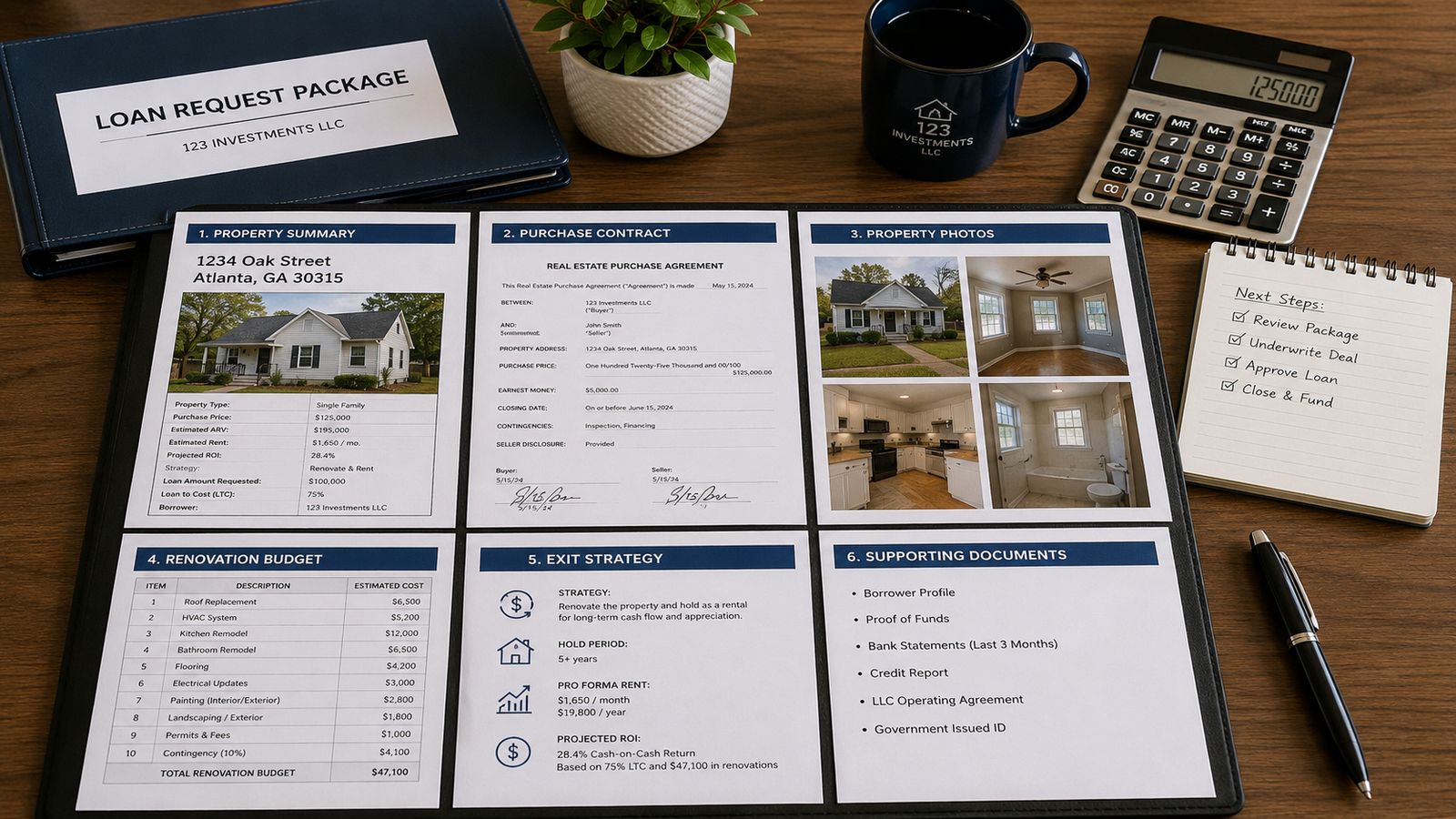
Private lenders can move quickly, but fast answers depend on clear information. A lender cannot evaluate a deal properly if the investor only provides a property address and a rough idea of the purchase price.
The more organized the borrower is, the easier it becomes to issue a useful term sheet. Preparation helps reduce back-and-forth, avoid confusion, and protect the closing timeline.
For investors, the goal is simple: make the deal easy to understand from the first conversation.
Why a clean file gets attention
Lenders review many requests. The files that move fastest are usually the ones that clearly explain the property, numbers, timeline, and exit strategy. A clean file does not need to be complicated. It needs to be complete enough for the lender to understand the opportunity.
When information is missing, the lender has to pause and ask questions. Those pauses can matter when the seller expects a fast answer.
A prepared investor helps the lender work quickly.
Start with the property basics
Every loan request should begin with the property address, asset type, purchase price, estimated value, requested loan amount, and expected closing date.
The lender should also know whether the property is vacant, occupied, under contract, listed, off-market, distressed, or in need of repairs. These details shape the review from the beginning.
A simple property summary can prevent a long chain of follow-up questions.
Provide the numbers that matter
Investors should prepare the purchase price, estimated repair budget, after-repair value, expected rent or resale value, holding costs, and planned exit. If the property is a rental, rent comps and lease information may also be useful.
If the deal depends on resale, comparable sales should support the projected value. If the deal depends on refinance, the investor should understand whether the stabilized income can support long-term debt.
The numbers should tell a realistic story.
Include photos and supporting documents
Photos help the lender understand condition quickly. A purchase contract, scope of work, contractor estimate, entity documents, insurance information, and title contact can also help move the file forward.
Not every document is needed at the first minute, but having them ready can reduce delays once the lender begins underwriting.
A borrower who can provide documents quickly is easier to work with and more credible.
Explain the exit strategy clearly
A private loan is usually short-term. That means the lender needs to know how the loan will be repaid. The investor should explain whether the exit is sale, refinance, stabilization, sale of another asset, or another defined source of capital.
The exit should match the timeline. If the renovation will take four months and the resale may take three more, the loan term should reflect that reality.
A clear exit strategy helps turn a request into a serious financing conversation.
The bottom line: Preparation creates speed
Investors often want fast term sheets, but speed begins before the lender receives the request. A clean package allows the lender to review the deal quickly and respond with more confidence.
The investor does not need to make the file perfect. They need to make it clear. The property, numbers, timeline, documents, and exit strategy should be easy to understand.
When the deal is organized, the financing process can move with the urgency real estate opportunities often require.
This article is general information for real estate investors, not legal, tax or financial advice. Swift Capital makes business-purpose loans on non-owner-occupied investment property; every loan is subject to underwriting, appraisal and approval.